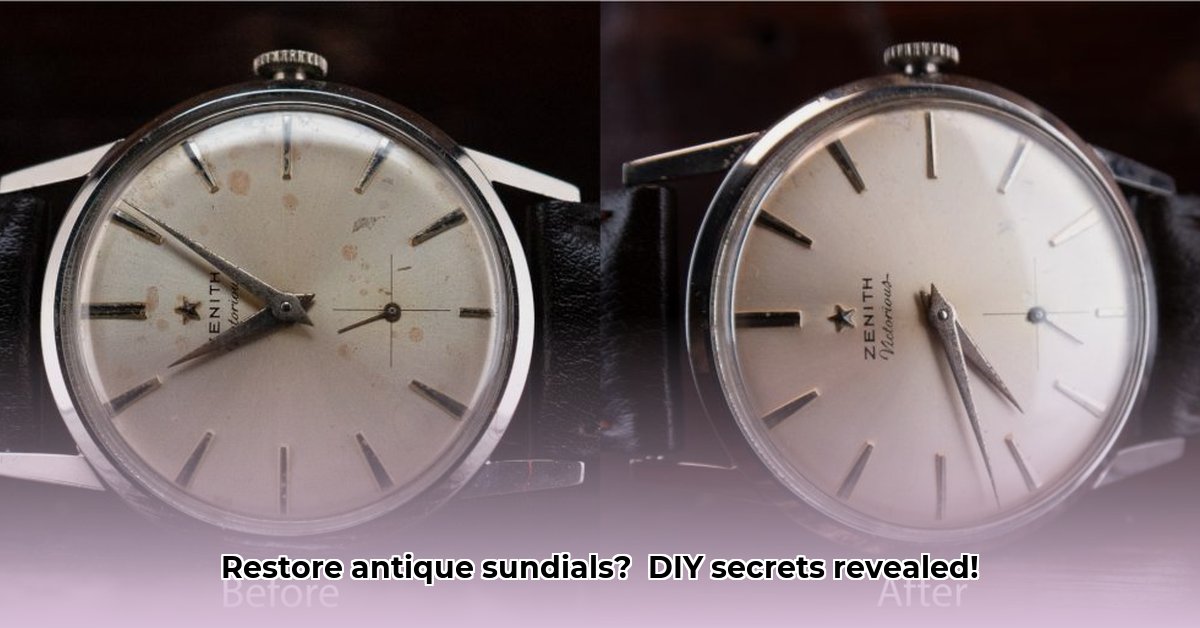
Bringing a weathered antique sun clock back to life is a rewarding blend of history, craftsmanship, and detective work. This guide empowers you to restore these fascinating timepieces, walking you through each step from initial assessment to long-term care. For more in-depth information, check out this helpful sun clock guide.
Assessing Your Antique Sun Clock: Uncovering its Secrets
Before you touch a tool, meticulously examine your sun clock. What type is it? Equatorial? Vertical? Armillary? High-resolution photos from all angles are crucial. Note the materials—brass, bronze, stone? Sketch the design. This detailed documentation is your first step, providing a vital record for future reference and aiding in identification of the clock's type and maker. Don't forget to note any markings or inscriptions – these can be invaluable clues.
Gathering Your Tools: Preparing for the Restoration
Proper tools are essential. This isn’t brain surgery, but careful preparation prevents damage. You'll need:
- Cleaning Supplies: Soft-bristled brushes (various sizes), soft cloths, distilled water, mild dish soap (test in an inconspicuous area first!), cotton swabs.
- Repair Materials: Adhesives suitable for the clock's materials (always test!), tiny screws, or other fasteners as needed.
- Protective Gear: Safety glasses and gloves are a must.
- Workspace: A clean, well-lit area with a soft, protective surface.
Gentle Cleaning: Revealing the Clock's Original Beauty
Years of grime obscure your sun clock's beauty. Begin gently. Use soft brushes to remove loose dirt. For tougher grime, a very dilute soap and water solution might work—test in a hidden spot first! Remember, patience is key. Slow, careful cleaning reveals layers of history. Did you know that some cleaning methods can actually damage antique materials?
Addressing Repairs: Knowing When to Ask for Help
Minor cracks might be repairable with suitable adhesives (test in a hidden area!), but extensive damage, especially to the gnomon (the shadow-casting element), demands professional help. Attempting complex repairs without proper training risks irreparable damage. It's better to get expert care.
Regulation and Recalibration (If Necessary): Fine-Tuning Your Timepiece
If your sun clock tells time, the gnomon's alignment is crucial. Minor adjustments might be manageable, consulting specialized guides or experts is recommended. Major adjustments require professional expertise.
Reassembly: The Rewarding Final Steps
Reassemble carefully, referring to your photos and notes. This is the exciting part—seeing your efforts bear fruit! A final gentle polish enhances the restored beauty.
Long-Term Care: Preserving Your Antique for Generations
Proper care ensures your sun clock remains a treasure.
- Regular Dusting: Gently dust regularly to prevent dirt buildup.
- Environmental Control: Protect from extreme temperatures, humidity, and direct sunlight.
- Careful Handling: Use clean hands and soft cloths.
- Avoid Harsh Chemicals: Never use harsh chemicals.
Advanced Techniques and When to Call in the Pros
Intricate gnomon repairs, restoration of rare materials, or structural issues need specialized skills. Consult seasoned clock restorers or sundial specialists.
Resources to Guide Your Journey
| Resource Type | Potential Sources |
|---|---|
| Restoration Guides | Online articles, forums, specialized websites |
| Books | Libraries, online booksellers, antique shops |
| Horological Societies | Local or national organizations focused on clocks |
| Specialist Restorers | Local antique restoration shops, museums |
Restoring an antique sun clock is a journey. With patience, attention to detail, and the resources above, you can successfully restore a piece of history. Document your process—it's a journey worth sharing!